What is Small Buisness Marketing ?
Small Buisness Marketing is that do-not-kill the goose approach of advertising a good or service when what is available is small yet desire is great. It has to do with smart decisions, being able to make the most out of what you have and getting down to the customers who truly matter. The small business marketing is based on the traditional 4 Ps of marketing, i.e., product, price, place, and promotion, but the implementation of these four factors is more open and is based on real-life experience.
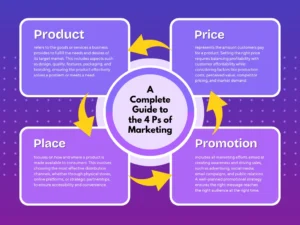
Small businesses operate differently from large corporations, which have bigger budgets and take longer to make decisions.. They lack access to the rich and detailed market reports or extensive research staffs but they do get something that is equally beneficial: speed and flexibility. Business proprietors get to study what their customers teach them on a daily basis. They experiment, observe what works and make rapid improvements not on assumptions. Marketing strategy : a plan to reach target customers.
Why Small Buisness Marketing is Good?
It is a practical experience that develops real expertise.Small businesses know their audience well because they stay in direct contact with them. As growth marketing expert Kevin Indig mentions, small firms act faster and connect directly with customers, which often builds stronger trust and customer loyalty.
After all, small business marketing builds on credibility, sincerity, and experience.. It is not about spending more than large brands, but rather; it is about knowing your audience better, serving them regularly and expanding with the help of your true relationships.
Best Small Buisness Marketing types and ideas
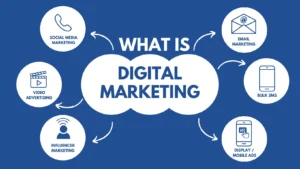
1.Social media marketing
2.Paid advertising, targeted advertising, PPC (Google Ads)
3.Email marketing
4.Affiliate marketing
5.Search Engine Optimization (SEO)
6.Content marketing
7.Video marketing
1.Social media marketing for Small Buisness Marketing
Social media has emerged as one of the most effective instruments of small businesses that desire to expand their presence and establish a good brand. As new platforms and trends are created every day, social media marketing remains an essential component of any successful digital marketing plan. The first factor is the simplest one: a significant portion of customers now learn about new brands on social media and use the latter as a tool to conduct research on the business prior to making a purchase.
The essence of social media marketing is to identify the correct audience, reach out and engage them in some manner, and maintain their attention. Small businesses can obtain actual outputs of social media through a few basic steps:
Trusted by their followers, so they become a good collaborator to the small buisness aiming to establish sincere relations and sell their products in a natural and familiar manner.
2.Paid advertising, targeted advertising, PPC (Google Ads)
Paid advertising can be an intelligent method of a small buisness to gain access to a potential customer faster and in a more controlled manner. Through targeted advertising and the pay-per- click (PPC) campaigns, companies can reveal their message to the interested individuals who are already interested in such products or services. Paid services such as Google Ads tend to be more cost-effective since you will not be paying to display your advertisement; you will only pay when someone actually clicks on your advertisement hence every rupee is easily monitored.
• Small buisness should observe some basic best practices in order to achieve positive outcomes in paid advertising:
• Establish specific objectives at the beginning, i.e. moving more traffic to the site, creating leads, or making sales.
•Reach the right customer by focusing your ads on a limited location, age, interests or search intent.
•Check your campaigns regularly and tweak them minuscule depending on what is getting great results, such as modifying keywords, copy, or budgets.
Paid advertising when properly done can enable the smaller buisness to grow more rapidly without investing much money in advertising and making sure that the advertisement reaches people who are most likely to act.
3.Email marketing (small buisness marketing)
Email marketing is among those strategies that have been tested and continue to record good results particularly in small businesses. In spite of the emerging nature of new marketing channels, email is a sure, direct, and cost-effective link to customers. It enables small businesses to connect with audience in a specific, quantifiable way as well as developing long-term relationships on the basis of trust and predictability.
The only difference is that email marketing is extremely effective due to its control and clarity. You have your email list, the choice of what to send, and it is easy to understand the success rate of any message with the help of open rates, clicks, and conversions. This renders email marketing useful and effective to small businesses.
• Small buisness email marketing: best practices:
• Apply audience segmentation, meaning subscribers can be grouped by their interests, previous behaviour or demographics. This assists in the correct message to the right people.
• Considerate personalizing your campaigns. Do not just use a first name, post content, offers, and information that truly reflect the needs and preferences of your audience.
Email marketing generates credibility and authority in the long run when it is conducted with an honest and relevant approach. It does not only entail selling but maintaining contact, value addition, and ensuring the customers are made to feel that you are not unaware of their existence.
4.Affiliate marketing
The affiliate marketing is an intelligent means of growing the small buisness without incurring high initial expenses. Rather than paying upfront to run advertisements, you agree to collaborate with trusted affiliates who promote your products or services and only receive a commission only when they succeed in making a sale. This renders affiliate marketing low-risk and performance based.
To achieve the actual results, you must concentrate on doing business with reputed and experienced affiliates whose audience is real and reflects your target customers. Give them quality promotional material, good product knowledge and a good commission package so that they can promote your brand in a comfortable and genuine manner.
5.Search Engine Optimization (SEO)
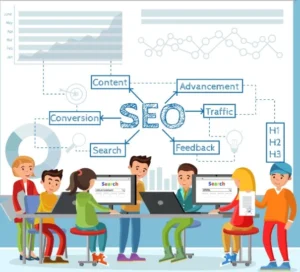
The concept of search engine optimization (SEO) may be unnoticed in the background, but the effect it produces on business development is potent. When an individual types in Google, it is more likely that he/she will be clicking on the results that appear at the outset- and that is where SEO puts a difference. An effective SEO strategy will make your business visible at the right moment, among the right people and not spend on each and every click.
You can do this by ensuring that your web site and content are search engine friendly so that you enhance your online presence and also so that the potential customers can find out about your business when they are in need or active demand of products or services like yours. To small businesses in particular, SEO creates a long-term value and trust and not short-term attention.
Despite the number of tools and techniques used in SEO, there are few important principles behind successful strategies:
• Search engines appreciate new and up to date information. It is important to regularly update your website so that Google knows that your business is active and trustworthy. This will be able to enhance the rankings such that customers will be able to find you easily in the long run.
When the SEO is conducted in a regular, precise and actual value, then it is more than an advertisement strategy. It has become a means to gain some trust, demonstrate competence, and expand your business over the long-term without resorting to artificial methods.
6.Content marketing
Content marketing provides a small business with an opportunity to shine in an overcrowded digital arena where a thousand possible brands are vying to capture the interest of their audience. Rather than being pushy, content marketing aims at creating value, and providing insight and actual experiences which contribute to building trust in the long term. As compared to conventional advertising, where producing a high initial investment and increase costs is sometimes a requirement, content marketing enables small companies to create a splash on a low budget.
Whenever you create content, produce it professionally and ethically to present your brand as a trusted source of information. One such site is a blog, where you can go into detail on a subject and respond to actual customer queries.Podcasts provide your brand with the human aspect and enables you to be more personal when sharing knowledge. Testimonials are also credible as they present the actual experiences of the actual customers, and the interactive content will motivate action and not passive viewing.
Content marketing is best concerned with consistency, usefulness and authenticity. With the release of truthful, up-to-date, and profound content, small businesses will be capable of gaining authority, gaining credibility, and establishing meaningful and long-lasting relationships with their consumer base, not because of excessive advertising investments.
7.Video marketing
Video marketing is a potential tool that can enable the small buisness to spread their brand message in a package that makes sense, personal, and comfortable to the consumer. Videos enable you to demonstrate your product, clarify your worth, and relate to your audience more humanely as opposed to just using text or images only.Small businesses can now reach a vast audience without a huge budget by using platforms like YouTube and TikTok.
The video marketing is particularly effective owing to the effect it has on actual outcomes. Video content in many cases helps marketers generate leads and directly leads to increased sales and this is not a passing fad as many marketers testify to it being a reliable and proven strategy.
In order to maximize video marketing, your videos should be short, straight, and mobile users friendly, as a majority of the citizens view videos on their cell phones. Be simple when telling stories; you need to build an emotional appeal and demonstrate what your brand has that is unique.
When videos show authenticity, clarity, and purpose, they build trust, demonstrate professionalism, and create a strong first impression on viewer.